One thing I’ve learned in my many years of living with an autoimmune disease is to expect the unexpected. After a rather miserable 2022, coupled with a rheumatologist who was not open to my questions about new and old symptoms, I changed doctors. Best decision I’ve made in years!
The new doctor read the history that I wrote and brought with me to the office visit, gave me a physical exam, including fingernails, and asked if I had ever been diagnosed with a spondylitic disease – specifically, psoriatic arthritis. I explained that psoriatic arthritis (PsA) was my first diagnosis at age 34, but my then rheumatologist changed it a few months later to seronegative rheumatoid arthritis.
The new doctor ordered lab tests, X-rays and on my next visit, he diagnosed me with psoriatic arthritis (PsA), along with the rheumatoid arthritis (RA). I knew I had a lot to learn but not a lot of time to spare, because I was finishing up my latest e-book on RA.
Similarities between PsA and RA
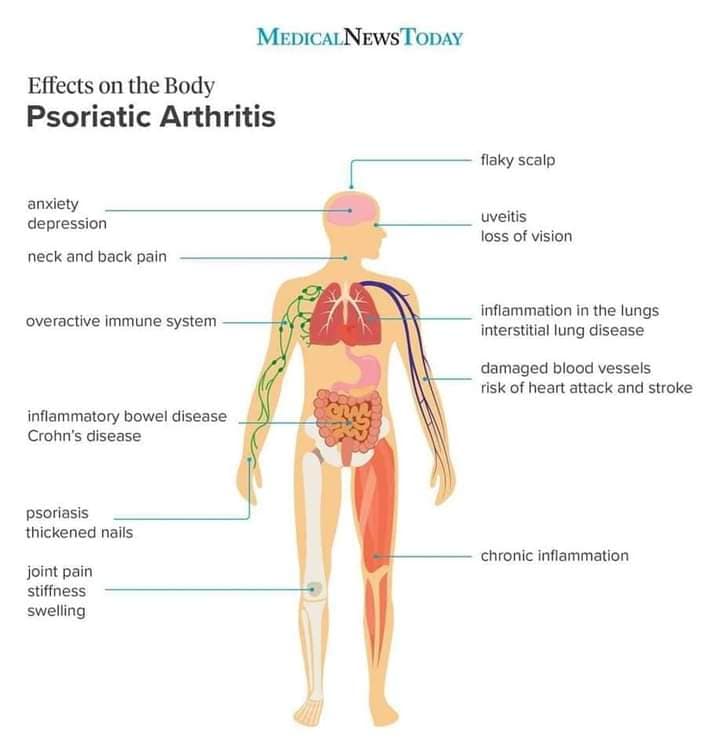
Psoriatic arthritis shares many characteristics and symptoms with rheumatoid arthritis and is often misdiagnosed if psoriasis is not present. With both conditions, the body’s immune system attacks itself, creating problems with previously healthy areas of the body. It might be just a joint or two or the immune system could attack many places throughout the body. When that happens, your entire life is affected.
Extreme, unrelenting fatigue makes you feel like you have the flu. Pain and inflammation in your knees may prevent you from participating in normal activities until it lets up. Foot or ankle pain and swelling can make walking difficult.
My left knee became a problem in my early 20’s. The orthopedic surgeon just called it arthritis and told me I needed a knee replacement. I ignored him and lived with the pain for months. Eventually, the pain went away, but returned off and on for the next 40 years, making walking, carrying babies and toddlers difficult.
A Temporary Solution
A rheumatologist at Vanderbilt University Medical Center finally injected the knee with a steroid giving me months of zero pain and stiffness. My last injection administered by my last rheumatologist was about 6 years ago still works to keep my knee pain-free but I honestly don’t know if the problem was caused by RA or PsA, because my diagnosis before last year was seronegative rheumatoid arthritis.
PsA Foot Pain
When PsA goes after your feet, your entire body suffers. Heel pain is a common point of inflammation for psoriatic patients. Twenty years ago, a podiatrist diagnosed my foot/heel pain as plantar fasciitis. Had I only known, this was likely connected to psoriatic arthritis. The podiatrist never mentioned any connection to an autoimmune disease.
Who Is Most likely to Get PsA
People with a history of psoriasis are more likely to develop psoriatic arthritis. (Looking back, I probably had mild psoriasis and didn’t know it.) You may be more likely to develop PsA if you experience severe stress or joint injuries or infections. (Losing my daughter in 2019 certainly qualified as severe stress!)
Obesity is another risk, as is a family history of psoriasis or PsA.
What to Do if You Are Diagnosed with PsA
Once you receive a definite diagnosis of PsA, I urge you to learn all you can about the disease in order to live your best life. If you smoke, quit! Smoking makes PsA worse.
Maintain a healthy weight. Eat a diet suitable for someone with an autoimmune disease. Think cold-water fish, like salmon, tuna or mackerel and meals full of fresh vegetables and fruit.
Low-impact exercise is crucial to protect your joints. Swimming, walking, yoga and using a stationary bike are all recommended.
Physical therapy helped me several times with problems that I can now blame on psoriatic arthritis. The exercises the therapist taught me to heal my shoulder pain and swelling still work on bad days. Another physical therapist helped heal my plantar fasciitis 20 years ago. If you suffer from pain in various joints, discuss physical therapy with your rheumatologist.
Finding a Balance
Understand that finding the right treatment for your disease is crucial to living your best life. Listen to your rheumatologist, take your prescribed medications, and live a healthy lifestyle for a positive outcome. PsA is a difficult disease to diagnose and treat. It’s up to you to not allow it to conquer you.
The exercises the therapist taught me to heal my shoulder pain and swelling still work on bad days. Another physical therapist helped heal my plantar fasciitis 20 years ago. If you suffer from pain in various joints, discuss physical therapy with your rheumatologist. HOW to both of these statements!!!!!